

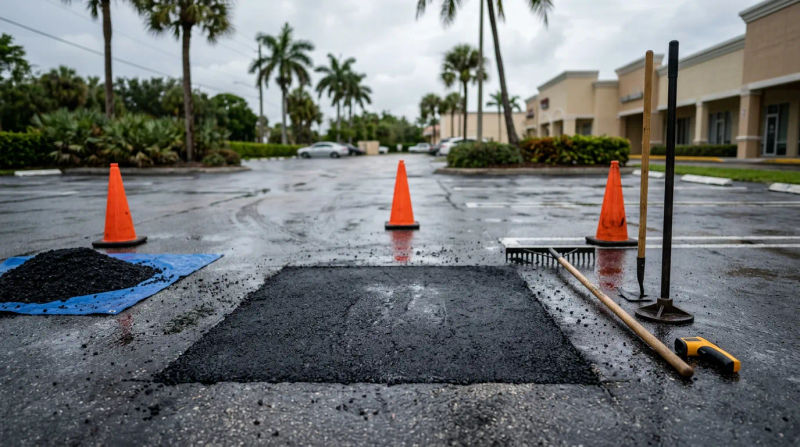
As a Senior Paving Operations Supervisor with over 15 years in the field here in Palm Beach County, I know that when a summer storm rolls through, cost is the first thing on a homeowner's mind. After the wind and rain subside, you walk outside to find a new, gaping pothole in your driveway - a hazard for your car and a liability for visitors. The immediate question is always: "What will this cost to fix?"
Especially during August, the peak of hurricane season, the need for answers is urgent. You're not just looking for a repair; you're looking for a fast, reliable solution to prevent further damage. My goal with this guide is to provide transparent, realistic information about the costs of emergency pothole repairs in West Palm Beach, so you can budget effectively and make an informed decision for your property.
Average Costs in West Palm Beach
Providing a flat rate for pothole repair is tricky because every situation is unique, especially after heavy rain. However, we can break down the typical asphalt pothole repair cost into general price ranges to give you a solid starting point for your budget. In our experience, pricing often depends on the repair method and scale.
- Small, Individual Potholes (under 2'x2'): For a single, straightforward pothole, you can generally expect to pay between $175 and $400 per pothole. This price typically covers a standard "saw-cut, remove, and replace" repair using hot-mix asphalt. Our crews cut clean, geometric edges, excavate the failed asphalt and damaged base material, fill the area with new material, and compact it to create a durable, seamless patch.
- Multiple Potholes or Larger Damaged Areas: When dealing with several potholes or a larger area of cracked, alligatored asphalt, the pricing model often shifts to a per-square-foot rate. For this type of work, costs in the West Palm Beach area usually range from $5 to $10 per square foot. There is often a minimum charge for mobilizing a crew and equipment, which can be around $1,000 to $2,500, depending on the crew size and equipment needed. This is why it's often more cost-effective to address all damaged areas at once.
- Temporary vs. Permanent Repairs: After a storm, you might be tempted by a quick, cheap fix. A "throw-and-go" cold patch repair is the least expensive option, but it's a temporary solution that will likely fail within a year, especially with Florida's heat and rain. A permanent repair using hot-mix asphalt costs more upfront but is fused to the existing pavement, preventing water intrusion and lasting for years. The same-day pothole repair pricing for a permanent fix reflects the use of superior materials and a more involved, professional process.
Factors That Affect Price
The price ranges above are a good guide, but several critical factors can influence the final cost of your emergency asphalt patching West Palm Beach project. Understanding these variables will help you decipher any quote you receive.
- Size and Depth of the Pothole: This is the most direct cost factor. A wider, deeper pothole requires more hot-mix asphalt, more labor to excavate, and potentially more base material to rebuild the foundation.
- Condition of the Subgrade: This is the biggest variable when it comes to pothole repair after heavy rain Florida. West Palm Beach's intense downpours can saturate the limestone or soil base beneath your asphalt. If our technicians find that the subgrade is soft and waterlogged, simply patching the surface won't work; the repair will fail quickly. The wet, unstable material must be excavated and replaced with a new, compacted aggregate base. This additional step adds significant labor and material costs but is absolutely essential for a lasting repair.
- Number and Proximity of Potholes: The more work we can do in a single visit, the better the value for you. The cost to mobilize our crew and heavy equipment is the same whether we're fixing one pothole or five. Bundling repairs together reduces the effective cost per pothole.
- Accessibility: Is the pothole in an open, easily accessible part of your driveway? Or is it in a tight corner, near a retaining wall, or up against a garage foundation? Difficult-to-access areas may require smaller equipment or more manual labor, which can increase the time and cost.
- Storm Debris: After a hurricane or tropical storm, our work area is often littered with palm fronds, branches, and other debris. Clearing the site to ensure a safe and clean work environment is a necessary first step that can add to the labor time quoted.
- Edge Milling: For a premium, long-lasting repair, we sometimes recommend milling the edges of the patch area. This process creates a slightly recessed edge that allows the new asphalt to be laid flush with the existing surface, creating a stronger bond and a smoother transition.
How to Get the Best Value
Everyone wants a fair price, but value isn't just about the lowest number on a quote. It's about getting a durable repair that you won't have to think about again for years. Here are a few tips from my years in the field:
- Act Fast: The moment you see a crack or small pothole, get it fixed. Water is the primary enemy of asphalt. A small crack lets water into the base, which then weakens and collapses under the weight of a vehicle, creating a pothole. Fixing it early is exponentially cheaper than fixing a major failure later.
- Choose a Permanent Repair: A hot-mix asphalt patch, properly installed by a trained crew, is the only real long-term solution. It might cost more today, but it saves you the expense and headache of re-doing a failed cold patch in 6-12 months.
- Group Your Repairs: Walk your entire driveway. If you see other cracks, low spots where water pools, or small potholes forming, get them all quoted at once. Addressing all issues in one visit maximizes the efficiency of the crew and equipment on-site.
- Think About the Source: Many driveways on homes built in the 1980s, common in neighborhoods like Palm Beach Gardens, may be nearing the end of their original lifespan. If you have widespread issues, it might be time to ask if a larger resurfacing project is more cost-effective than patching numerous spots. A good contractor will give you honest advice on patching versus repaving.
Questions to Ask Your Contractor
When you call for a quote, you are in control. Asking the right questions will help you vet the contractor and ensure you're getting a professional job. Here’s what our team expects to be asked:
- What is your exact process for this repair? (Look for answers that include saw-cutting, excavation, checking the base, and proper compaction.)
- Will you be using hot-mix asphalt or a cold patch material?
- How will you assess and handle a wet or unstable subgrade?
- Is your quote itemized and all-inclusive? Does it include debris removal and site cleanup?
- Are your crews fully licensed and insured in Palm Beach County?
- Do you offer any warranty or guarantee on your patch work?
An experienced, reliable contractor will have clear, confident answers to all these questions. They should be able to explain their standardized process and why it leads to a better, more durable result.
Dealing with sudden pavement damage is stressful, especially when you're already coping with the aftermath of a Florida storm. By understanding the costs, the factors that drive them, and the questions to ask, you can confidently navigate the repair process and restore the safety and appearance of your property.
For a personalized, itemized estimate in the West Palm Beach area, contact Economy Paving for a free consultation. Our experienced team can assess the storm damage and provide you with a clear plan and transparent pricing.