

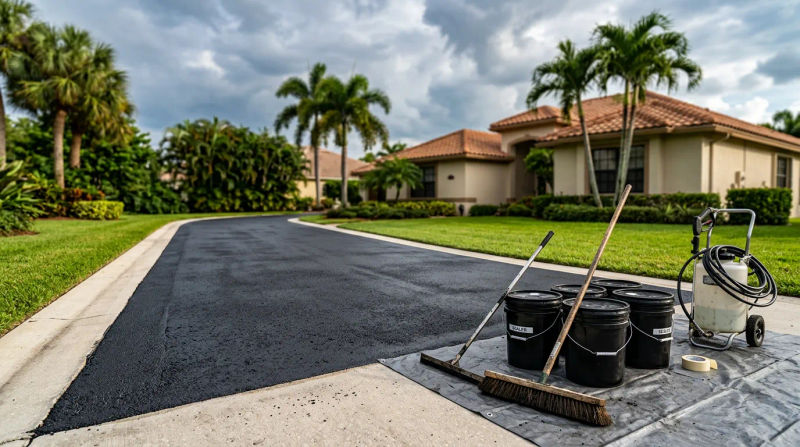
As a Senior Paving Operations Supervisor with over 15 years in the field here in Palm Beach County, I know that one of the first questions homeowners have is about cost. When you’re considering protecting your asphalt driveway, you need clear, straightforward information to budget effectively. That’s exactly what I want to provide in this guide - a transparent look at what goes into sealcoating pricing, especially with the unique challenges our West Palm Beach climate presents.
With hurricane season upon us, the conversation around protecting our properties becomes more urgent. Your asphalt is no exception. The intense UV radiation and frequent summer showers have already been working to oxidize and weaken your driveway's surface. Now, as we approach the peak storm weeks, sealing that surface becomes a critical defense against the torrential, repeated soaking rains that can penetrate unprotected asphalt, saturate the base layer, and lead to costly structural damage.
Average Costs in West Palm Beach
Let's start with the numbers. While every project is unique, we can establish some realistic budget ranges for professional sealcoating services in our area. The driveway sealcoating price West Palm Beach residents can expect is typically calculated per square foot.
- Residential Driveways: For a standard two-car driveway (roughly 400-800 square feet), homeowners can generally expect to pay between $0.25 and $0.50 per square foot. This translates to a typical project cost of approximately $200 to $600, depending heavily on the factors we'll discuss below.
- Commercial Parking Lots: For larger surface areas like business parking lots or HOA roadways, the commercial parking lot sealcoating cost Florida businesses see will be lower on a per-square-foot basis due to economies of scale. Prices often range from $0.18 to $0.35 per square foot. The larger the uninterrupted area, the more efficient our crews can be, which is reflected in the price.
It’s important to view these as starting points. A quote that comes in significantly lower should be examined carefully, as it may indicate cut corners on preparation or material quality.
Factors That Affect Price
The final price on your estimate is a summary of several key variables. Understanding these will help you see why one quote might differ from another.
- Size and Layout of the Area: This is the most significant factor. A large, rectangular parking lot is more straightforward to seal than multiple small, winding driveways with lots of edges, like those found in the many beautiful master-planned communities in Wellington and surrounding areas. The more time our technicians spend on detailed edge work by hand, the more it impacts the labor cost.
- Condition of the Existing Asphalt: This is where my experience really comes into play. An asphalt surface that is only a few years old may need nothing more than a thorough cleaning before sealing. However, many homes in our area were built in the 1990s and 2000s. A 20- to 30-year-old driveway has endured decades of Florida sun and rain. It will likely require significant prep work, which is crucial for the sealer to adhere properly and last. This includes:
- Crack Filling: Sealing over open cracks is pointless; water will still get in. We use hot-pour rubberized crack filler to properly seal these vulnerabilities. The extent of cracking directly impacts the cost.
- Pothole or Surface Repair: Any areas of crumbling or failed asphalt must be cut out, patched, and compacted before the entire surface can be sealed.
- Oil Spot Treatment: Engine oil and other fluids can cause the new sealer to flake off. These spots must be cleaned and primed with a special-purpose product to ensure adhesion.
- Required Preparation: A low-cost job often skips this part, but it's the foundation of a durable finish. Our standardized process always includes deep cleaning the surface with power blowers and, if needed, pressure washing to remove dirt, debris, and organic matter. This non-negotiable step ensures the sealer bonds with the asphalt, not with a layer of dust.
- Type of Sealer Used: In South Florida, we primarily use high-quality, commercial-grade asphalt emulsion sealers. These products are formulated to withstand intense UV exposure and resist fuel spills. They are also more environmentally friendly and have less odor than older refined tar-based sealers. While material costs can differ slightly, the key is using a product designed for our hot, humid, and wet environment.
- Number of Coats: For proper protection and a uniform, dark black finish, two coats of sealer are the professional standard. A single, thick coat will not cure properly and will wear away quickly. Our crews apply two thin, even coats, allowing for appropriate drying time in between. This method provides the most durable and longest-lasting protection.
How to Get the Best Value
Getting the "best value" isn't about finding the cheapest price; it's about investing in a job that will last, saving you money in the long run.
- Focus on Preparation: When comparing quotes, ask specifically about the preparation process. A contractor who can't detail their cleaning, crack filling, and priming steps is likely cutting corners that will cost you later.
- Timing is Everything: The best time to sealcoat before hurricane season is in the late summer or early fall. We need a window of dry weather (typically 24-48 hours) for the sealer to cure fully. Applying a coat right before a storm hits is a waste of money, as the rain can wash it away or prevent it from forming that critical, waterproof barrier. Scheduling the work before the peak rainy weeks ensures your asphalt is protected when it needs it most.
- Don't Defer Maintenance: That small crack you see today will be a wide, water-collecting trench after a season of heavy rain. Addressing repairs and sealcoating proactively is far less expensive than extensive patching or repaving down the road.
Questions to Ask Your Contractor
To ensure you're hiring a reputable and skilled professional, here are a few questions I always recommend homeowners ask:
- What is your exact process for cleaning and preparing the surface?
- How do you treat oil spots and fill cracks? Do you use hot-pour filler?
- What specific type and brand of sealer do you use, and why is it right for Florida?
- How many coats will you apply, and what is the typical drying time needed?
- Can you provide proof of your license and liability insurance?
- What does your warranty cover and for how long?
An experienced contractor will have ready, confident answers to these questions.
Protecting Your Investment
Ultimately, a professional asphalt sealcoating cost is a small investment in protecting the much larger value of your asphalt driveway or parking lot. It restores the rich black color, makes your property look sharp, and most importantly, provides a crucial shield against water intrusion and UV damage - our two biggest enemies here in West Palm Beach. By understanding the factors that influence price and focusing on quality preparation, you can make a smart, informed decision that protects your pavement for years to come.
For a personalized estimate from a team that understands the demands of the South Florida climate, contact Economy Paving for a free consultation. Our trained crews are ready to help you prepare your property for whatever the weather brings.