

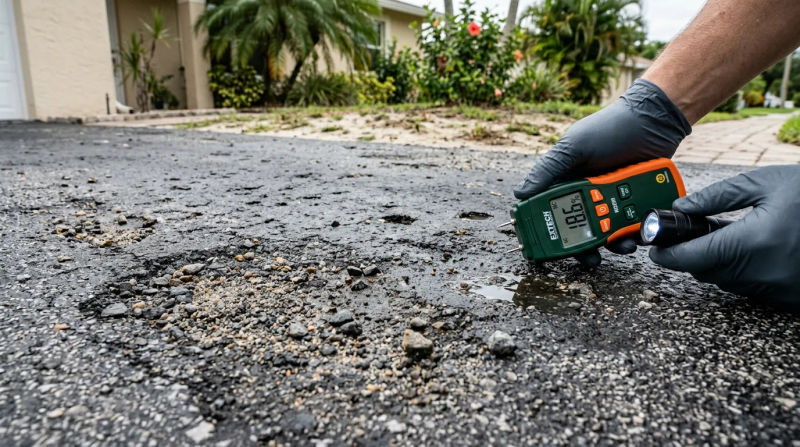
After a heavy September downpour, you might walk out to your driveway and notice something different. Maybe you see a collection of tiny, loose stones washed into a small pile near the garage or street. Or perhaps the surface, which used to be a uniform black, now looks coarse and gravelly. What you're likely seeing is a common issue we encounter frequently in South Florida: asphalt raveling.
As a paving supervisor with over 15 years in the field, I've seen countless driveways and parking lots start to show this kind of wear. It’s a subtle change at first, but it’s your pavement’s way of telling you that its protective outer layer is beginning to fail. Especially here in Pompano Beach, the combination of intense sun, high humidity, and late hurricane season rains can accelerate this process, making it crucial to recognize the signs early.
Common Signs and Symptoms
Asphalt raveling is the progressive separation of the aggregate (the stones and sand) from the asphalt binder (the black, tar-like liquid) that holds it all together. It often starts small but can quickly lead to more significant deterioration. Here’s what our crews are trained to look for:
- Loose Gravel or Stones: This is the most obvious sign. You'll find loose aggregate on the surface of your driveway or see it washed away into gutters after a rainstorm. If you can scuff the surface with your shoe and dislodge stones, you have active raveling.
- A Rough, Coarse Texture: Healthy asphalt has a relatively smooth, tightly packed surface. As raveling begins, the surface becomes rough and abrasive as the finer particles wash away, exposing the larger, jagged aggregate underneath.
- Faded, Blotchy Appearance: The pavement may lose its rich, black color and take on a faded gray or “salt-and-pepper” look. This indicates that the top layer of asphalt binder has worn away, revealing the lighter-colored stones.
- Increased Water Puddling: As the surface material is lost, shallow depressions can form. After a rain, you might notice small puddles where water used to drain away properly. This is a clear indicator of asphalt surface loss Pompano Beach property owners should not ignore.
- More Pronounced Tire Marks: On a raveling surface, the friction from tires can pull away weakened aggregate more easily, sometimes leaving more visible tracks than before.
What Causes This Problem
Raveling isn't just a cosmetic issue; it's a symptom of the asphalt binder breaking down. Several factors contribute to this, many of which are amplified by our local Pompano Beach climate.
- Oxidation from Sun and Air: The primary culprit is oxidation. Over time, constant exposure to UV rays and oxygen causes the asphalt binder to become hard and brittle. It loses its flexibility and its ability to hold the aggregate securely. Think of it like a plastic toy left out in the sun - it eventually becomes fragile and cracks.
- Water Damage: This is a major accelerator in our region. Frequent, heavy rains and high humidity mean that pavement surfaces stay damp for extended periods. Water seeps into the microscopic pores of the asphalt, weakening the bond between the binder and the aggregate. When traffic drives over the wet surface, the hydraulic pressure can pop the stones right out of the weakened matrix.
- Poor Initial Installation: Sometimes, the problem dates back to the day the asphalt was laid. If the asphalt mix was too cold when it was installed or wasn't compacted properly with heavy rollers, it results in a pavement with too many air voids. These voids create pathways for air and water to penetrate deep into the asphalt mat, causing it to age and ravel from the inside out. Many homes in the Pompano Beach area, particularly the classic 1950s post-war Ranch homes, may have older driveways that were installed using techniques less advanced than today's standardized processes, making them more susceptible to this issue as they age.
- Traffic and Use: While a residential driveway sees less stress than a commercial lot, even regular car traffic contributes to wear. On a raveling asphalt parking lot, the constant turning of wheels and the weight of vehicles drastically speed up the loss of aggregate, quickly turning a minor issue into a major repair need.
When to Call a Professional
One of the most common questions we get is when to repair raveling asphalt. The simple answer is: as soon as you notice it. Addressing raveling early can often be done with less invasive and less expensive methods, saving you from a costly full replacement down the road.
While a DIY enthusiast might be tempted to simply buy a bucket of sealer from a hardware store, this is often a mistake. Applying a thin sealcoat over a weak, raveling surface is like putting a bandage on a broken arm. It might cover the problem visually for a short time, but it doesn't fix the structural instability. The loose aggregate will soon break through the new coating, and you'll be back where you started.
It’s time to call for a professional assessment when you observe the following:
- The surface is actively shedding: If you can easily dislodge stones with your foot or a stiff broom, the raveling is advanced.
- Significant texture change: If large patches of your driveway have become noticeably coarse and rough.
- Visible surface loss: If you can measure a loss of a quarter-inch or more in surface height compared to an adjacent sidewalk or garage slab.
- Combined issues: If you see raveling along with other problems like widespread cracking (especially alligator cracking), potholes, or drainage issues.
An experienced professional will conduct a thorough diagnosis. They won't just look at the surface; they will assess the extent of the damage, determine the root cause, and recommend the correct repair. This might range from a specialized slurry seal or a thin overlay for moderate cases to a more robust mill-and-pave solution for severe asphalt surface loss Pompano Beach conditions.
Conclusion
Your asphalt driveway or parking lot is a significant investment. Recognizing the early signs of asphalt raveling - loose stones, a rough texture, and a faded appearance - is the first step in protecting that investment. Here in Pompano Beach, our sun and rain create a challenging environment for pavement, making proactive maintenance essential.
Don't wait for minor surface wear to become a network of potholes. Addressing raveling early with the right professional treatment restores the protective surface, prevents water from penetrating to the base layer, and extends the life of your entire pavement system. Our trained crews understand that a successful repair depends on a proper diagnosis and a standardized process, ensuring a durable and long-lasting result.
If you notice any of these signs, contact a local Asphalt Paving professional for an inspection. They can provide an expert opinion and help you choose the best course of action for your property.