

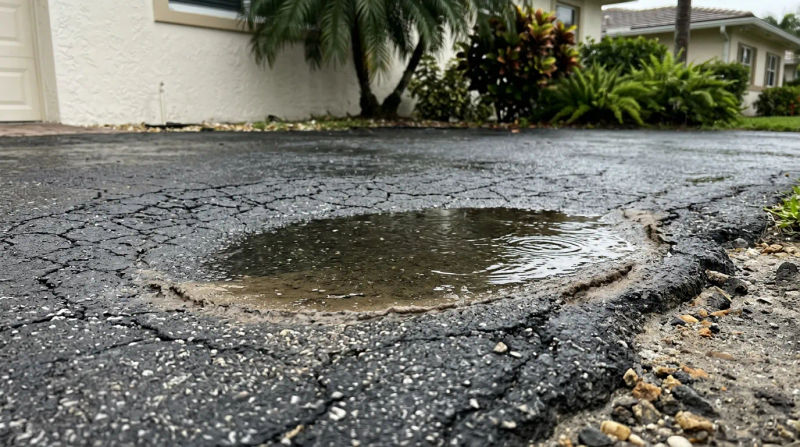
As a Senior Paving Operations Supervisor with over 15 years of experience in the West Palm Beach area, I’ve seen firsthand what our intense August downpours can do to an asphalt driveway. You might look outside after a storm and see a familiar sight: a persistent, mirror-like puddle that just won’t go away. It might seem like a minor annoyance, but that standing water is one of the most destructive forces your pavement can face. During the peak of hurricane season, these seemingly small issues can quickly escalate, turning minor flaws into major failures. Understanding the warning signs is the first step in protecting your investment.
Common Signs and Symptoms
Water should sheet off your asphalt surface efficiently. When it doesn't, it leaves clues. Our trained crews are taught to spot these indicators during every assessment, as they often point to deeper issues. Here are the key red flags to look for after a rainstorm.
- Ponding Water: This is the most obvious symptom. If you have ponding water on an asphalt driveway for more than 24 hours after the rain stops, you have a drainage issue. These low spots in asphalt after rain act like magnifying glasses for sun damage and allow water the time it needs to penetrate the surface.
- Water Stains and Discoloration: Even when the driveway is dry, you can often see where water has been sitting. Look for discolored rings or patches of dirt and silt left behind. These “ghost puddles” are a map to your problem areas.
- Algae or Moss Growth: In Florida’s hot, humid climate, chronic moisture creates a perfect environment for organic growth. If you see green or black, slimy patches on your asphalt, it’s a sure sign that area stays wet for far too long.
- Raveling (Loose Stones): Asphalt is a mixture of stone aggregate and a petroleum-based binder. When water sits on the surface, it slowly strips the binder away, causing the small stones to come loose. If an area feels rougher than the surrounding pavement and you see loose gravel, it's likely due to water damage.
- Alligator Cracking: This pattern of interconnected cracks looks like the scales on an alligator's back. This is a major warning sign of structural failure. It means water has penetrated the top layer and weakened the sub-base, causing the flexible pavement to bend and crack under weight.
- Sunken Areas or Depressions: Before a puddle even forms, you might notice a slight dip or depression in your driveway. You might feel it when you drive over it. These low spots are the initial stage of many significant asphalt drainage problems and will inevitably collect water.
- Erosion Along the Edges: Pay close attention to the sides of your driveway. If you see soil washing away or small channels forming, it could be one of the classic asphalt base washout signs. This indicates that water is running underneath the pavement structure, undermining its support system from the edges inward.
What Causes This Problem
Identifying the symptom is one thing; understanding the root cause is what allows for a permanent solution. In our experience, drainage issues almost always stem from a problem with the pavement's foundation or its initial design. A surface patch might fix a puddle for a season, but it won’t solve the underlying issue.
Improper Slope and Grading The most frequent cause we encounter is incorrect grading. An asphalt surface must be sloped to direct water away from buildings and toward a designated drainage area, like a street or a swale. A standard slope is about a quarter-inch of fall for every foot of pavement (roughly a 2% grade). If the surface is too flat, water will inevitably find the lowest point and sit there. Our crews use precise instruments to measure grade and ensure water flows exactly where it’s supposed to.
Sub-Base Compaction and Settlement Asphalt is only as strong as the foundation it’s built on. The crushed stone sub-base beneath your driveway provides the structural support. If this base was not properly compacted with heavy machinery during installation, it can settle unevenly over time. This settlement creates the depressions and low spots in asphalt after rain that lead to ponding. This is particularly true in areas with sandy soil like we have in Palm Beach County, which requires rigorous compaction standards.
Base Washout West Palm Beach’s high groundwater and torrential rains can create powerful subsurface water flow. If the edges of your driveway are not properly supported, this water can wash away the sand and gravel base from underneath. This is a severe problem that leads to unsupported asphalt, which will quickly crack and collapse under the weight of a vehicle. This is one of the most critical asphalt base washout signs to watch for.
Regional and Historical Factors It's also worth considering the age of your property. Many neighborhoods in surrounding areas like Pompano Beach are filled with classic 1950s ranch homes. While beautifully built, the driveways on these properties are now over 70 years old. Decades of settlement, changing landscape grades, and the addition of new patios or walkways can disrupt the original drainage plan, creating new asphalt drainage problems that weren't present when the home was new.
When to Call a Professional
Some minor issues can be handled by a diligent homeowner, but drainage problems often require professional expertise and equipment. Knowing the difference can save you time and money.
DIY-Friendly Maintenance:
- Clearing Debris: Regularly sweep leaves, grass clippings, and dirt off your driveway. This prevents clogs and allows you to see the condition of your pavement.
- Cleaning Drains: If your driveway empties into a channel or box drain, ensure the grate is clear of obstructions.
When Professional Help is Necessary: If you observe any of the major signs listed above, especially ponding water on your asphalt driveway that lasts for days, it's time to call for an assessment. An experienced professional should be contacted if you see:
- Alligator Cracking: This is not a surface issue. It signifies a failing base that cannot be fixed with a simple sealant or patch. The affected area often needs to be removed and the sub-base rebuilt.
- Significant Low Spots: If a puddle is larger than a few feet in diameter or deeper than half an inch, a simple patch will likely fail. Professionals can use techniques like infrared asphalt restoration to heat and re-grade the area or perform a full-depth patch to correct the slope.
- Evidence of Base Washout: If the edges of your driveway are crumbling or you see eroded soil, a qualified team needs to diagnose the extent of the washout and stabilize the base to prevent a larger collapse.
An experienced technician won't just look at the puddle; they will assess the entire system - the slope, the condition of the sub-base, and where the water is supposed to be going. This holistic diagnosis is crucial for a long-lasting repair.
Conclusion
In our climate, water is the number one enemy of asphalt pavement. During the West Palm Beach hurricane season, a small drainage issue can rapidly degrade into a costly structural failure. Paying attention to the early warning signs - persistent puddles, staining, fine cracks, and edge erosion - is your best defense. Don't wait for a small depression to become a pothole or for fine cracks to turn into a web of alligatoring. Addressing asphalt drainage problems early not only preserves the appearance of your property but also protects the structural integrity of your driveway for years to come.
If you notice any of these signs, contact a local Asphalt Paving professional for an inspection.